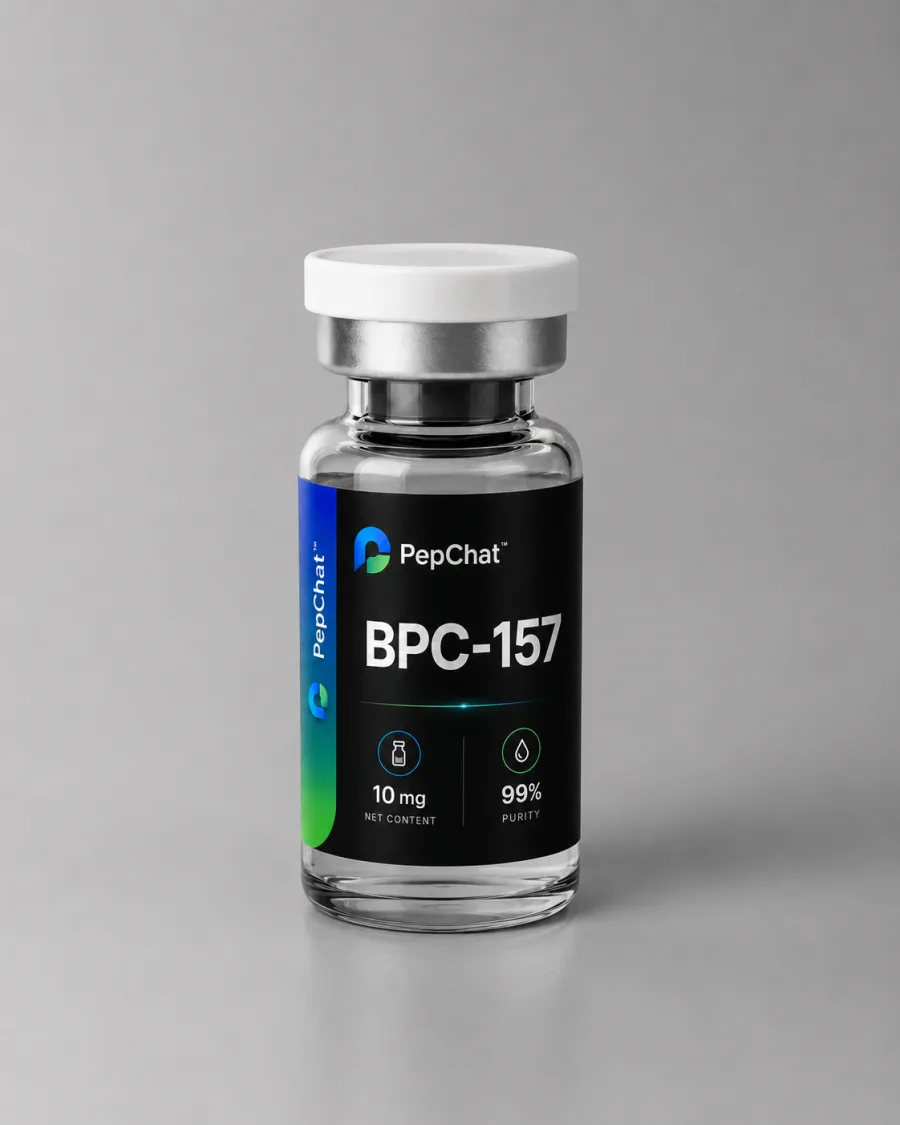
BPC-157 (Body Protection Compound 157) is a synthetic pentadecapeptide, fifteen amino acids long, derived from a sequence within a protein found in human gastric juice. It has been investigated since the early 1990s, principally by Predrag Sikirić's group at the University of Zagreb, and the resulting body of work runs to well over a hundred papers. Nearly all of it is preclinical: cell culture and rodent studies. That is the first thing to hold in mind when reading anything about this peptide.
What the animal literature has examined
The most consistent theme across the rodent studies is tissue repair. Models have included transected and crushed tendons, muscle lacerations, ligament injuries, bone defects, skin wounds and various gastrointestinal lesions. In many of these, animals given BPC-157 showed faster restoration of tissue structure and function than controls. Separate lines of work have looked at the peptide in models of inflammatory bowel conditions, in chemically induced gastric ulcers, and in studies of blood-vessel formation and blood pressure regulation.
It is worth being precise about what these studies show. They show that, in the specific species, injury model, dose and route used, an effect was measured relative to controls. Many were performed by a single research group, and independent replication has been limited. Results from rat tendons do not translate directly to any other setting.
Proposed mechanisms
Several mechanisms have been proposed, none conclusively established. The most cited is an effect on angiogenesis, the growth of new blood vessels, with studies reporting increased expression of vascular endothelial growth factor receptor 2 and activation of the nitric-oxide system. Others report modulation of growth-factor signalling (including FAK-paxillin and EGR-1 pathways), effects on collagen organisation, and interactions with the dopaminergic and serotonergic systems in the central nervous system, which Sikirić's group has framed as a brain-gut axis effect. The absence of a confirmed receptor is a notable gap: BPC-157's effects are described at the level of pathways and outcomes rather than a defined binding site.
Stability and handling
One practical property that stands out in the literature is stability. BPC-157 is reported to remain intact in human gastric juice for more than 24 hours, which is unusual for a peptide and is why oral administration appears in the animal studies alongside injection. As a lyophilised powder it is stored cold and reconstituted with bacteriostatic water for laboratory use; reconstituted solutions are refrigerated and used within the period appropriate to the diluent.
Human data
Published human evidence is very thin. A small number of case reports and conference abstracts exist; no completed randomised controlled trial has been published in a peer-reviewed journal. Regulatory agencies have not evaluated BPC-157 for any use, and it is not an approved medicine in Canada, the United States or the European Union. PepChat supplies it strictly as a research chemical for laboratory study.
Reading the research critically
- Check the model. Tendon, muscle, gut and CNS studies use different injuries, doses and endpoints; a headline about one does not transfer to another.
- Check the route. Intraperitoneal, intragastric and topical administration all appear, and they are not interchangeable.
- Check the group. Independent replication outside the originating laboratory is limited, and that is a reasonable reason for caution.
- Check the species. Effects measured in rats are hypotheses about other species, not findings.
Key takeaways
- BPC-157 is a 15-residue synthetic peptide with a large preclinical literature centred on tissue-repair models in rodents.
- Proposed mechanisms involve angiogenesis, nitric-oxide signalling and growth-factor pathways; no receptor has been confirmed.
- It is unusually stable, including in gastric juice.
- Human evidence is limited to case reports; it is not an approved medicine anywhere.